
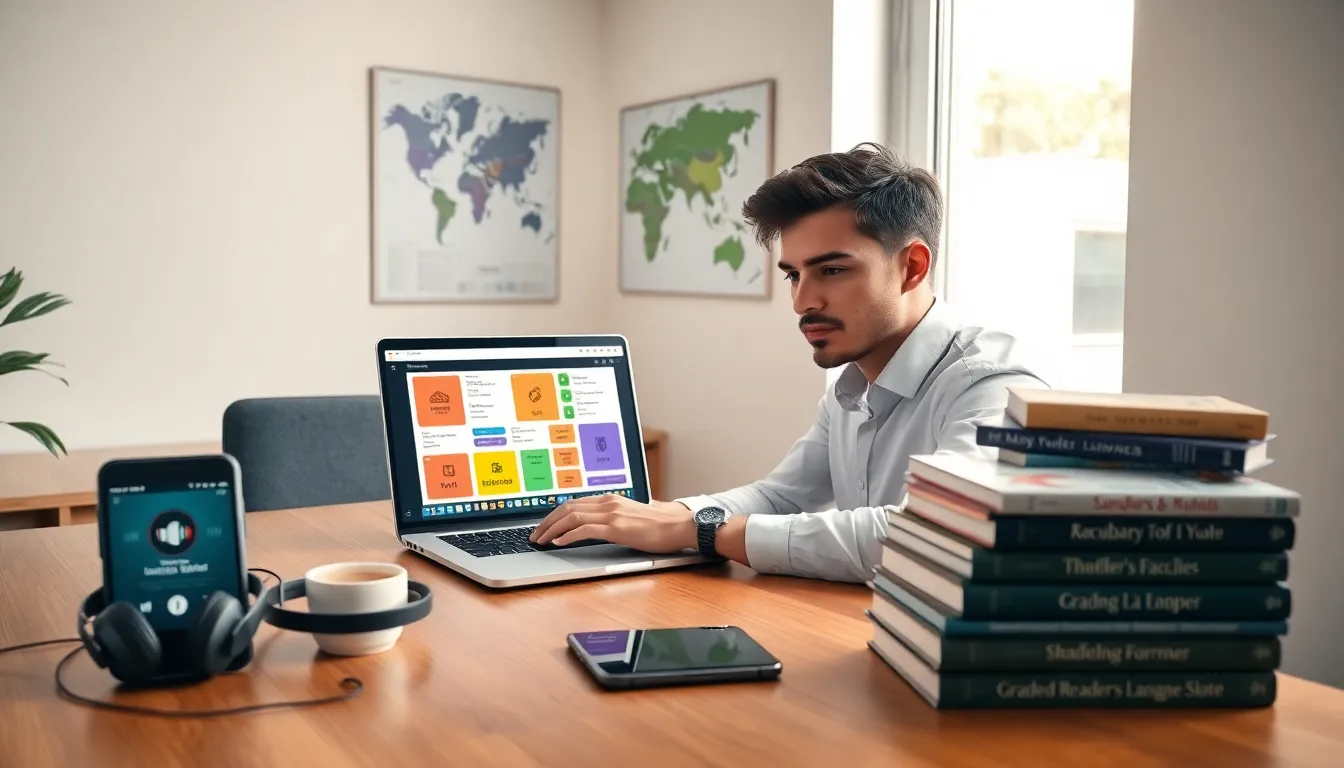
Language learning examples show what actually works when picking up a new language. Textbooks and grammar drills have their place, but real progress comes from practical methods that engage multiple skills at once. Whether someone wants to speak French with confidence, read Japanese novels, or hold conversations in Spanish, the approach matters more than the hours logged.
This guide breaks down proven strategies for mastering a new language. From immersive listening techniques to daily habit-building, these methods have helped millions of learners move from beginners to fluent speakers. The best part? They’re all accessible, regardless of budget or schedule.
Table of Contents
ToggleKey Takeaways
- Immersive listening and comprehensible input are proven language learning examples that help the brain absorb patterns and vocabulary naturally.
- Speaking practice through self-talk and language exchange apps bridges the gap between passive understanding and active production.
- Extensive reading accelerates vocabulary acquisition faster than any other activity—start small with graded readers and build consistency.
- Writing exercises like journaling and using correction apps reinforce grammar through active production rather than passive recognition.
- Combining language learning apps with real-world application, such as ordering food or changing phone settings, cements knowledge into practical skills.
- Daily 15-minute study sessions outperform occasional long sessions—consistency and habit stacking are the keys to long-term progress.
Immersive Listening and Speaking Practice
Immersive listening stands out among language learning examples because it mimics how children acquire their first language. The brain absorbs patterns, rhythms, and vocabulary through repeated exposure. Podcasts, music, and native-speaker content provide this exposure without requiring travel.
Start with content slightly above current comprehension level. A learner who understands 70-80% of what they hear will pick up new words from context. This method, called “comprehensible input,” was popularized by linguist Stephen Krashen and remains a foundation of effective language learning examples.
Practical Listening Techniques
- Podcasts for learners: Shows like “Coffee Break Spanish” or “JapanesePod101” offer structured lessons with native speakers.
- TV shows with subtitles: Watch first with subtitles in the target language, then without. Netflix and YouTube offer extensive libraries.
- Music and lyrics: Listen to songs, then read the lyrics. This builds vocabulary and improves pronunciation.
Speaking practice requires active output. Many learners consume content passively but avoid speaking. This creates a gap between understanding and production.
Speaking Without a Partner
Self-talk works surprisingly well. Describing daily activities out loud, what someone is cooking, where they’re walking, how they feel, forces the brain to retrieve vocabulary in real time. Recording these sessions and playing them back reveals pronunciation issues and hesitation patterns.
Language exchange apps connect learners with native speakers worldwide. Tandem, HelloTalk, and iTalki offer free or low-cost options for conversation practice. These platforms represent some of the most effective language learning examples available today because they provide immediate feedback from real speakers.
Reading and Writing Exercises for Skill Development
Reading builds vocabulary faster than any other activity. Studies show that extensive reading, consuming large amounts of text at an appropriate level, accelerates word acquisition significantly. Language learning examples from successful polyglots consistently include reading as a core practice.
Graded readers offer an entry point for beginners. These books use simplified vocabulary and grammar to tell stories or convey information. Publishers like Penguin and Oxford produce graded readers in dozens of languages.
Building a Reading Habit
- Start small: Five minutes daily beats one hour weekly. Consistency matters more than duration.
- Choose interesting material: Motivation drops when content bores the learner. Pick topics that genuinely interest them.
- Read without a dictionary first: Constantly stopping to look up words breaks flow. Mark unknown words and review them later.
News sites designed for learners, like News in Slow Spanish or NHK World Easy Japanese, bridge the gap between graded readers and authentic content. They cover current events using simplified language.
Writing reinforces grammar and vocabulary in ways that reading alone cannot. The act of producing sentences forces learners to apply rules actively rather than recognize them passively.
Effective Writing Exercises
- Journaling: Write three to five sentences daily about anything. Describe the weather, meals, or thoughts.
- Social media posts: Platforms like X (formerly Twitter) limit character counts, encouraging concise expression.
- Pen pals and language exchange: Writing to native speakers provides authentic practice and cultural insight.
Correction matters for improvement. Apps like LangCorrect connect writers with native speakers who correct entries for free. This feedback loop transforms writing from isolated practice into interactive language learning examples that accelerate progress.
Interactive Tools and Real-World Applications
Technology has transformed how people learn languages. Apps, software, and online platforms offer structured lessons, spaced repetition, and gamification. These tools represent modern language learning examples that fit into busy schedules.
Popular Language Learning Apps
| App | Strengths | Best For |
|---|---|---|
| Duolingo | Gamified lessons, free tier | Beginners, casual learners |
| Anki | Customizable flashcards, spaced repetition | Vocabulary building |
| Pimsleur | Audio-based, focuses on speaking | Auditory learners, travelers |
| Babbel | Structured courses, grammar focus | Intermediate learners |
No app replaces human interaction, but these tools supplement other methods effectively. The best approach combines apps with conversation practice and authentic content consumption.
Real-world application cements what learners study. Abstract knowledge becomes practical skill through use. Language learning examples that include real-world practice consistently produce better outcomes.
Ways to Apply Language Skills
- Order food in the target language: Many cities have restaurants where staff speak various languages.
- Attend cultural events: Meetup groups, film screenings, and community gatherings offer exposure.
- Travel or virtual travel: Even short trips create opportunities for immersion. Virtual tours and online events provide alternatives.
- Change phone settings: Switching device language forces daily interaction with new vocabulary.
Gaming offers another avenue. Playing video games in a target language combines entertainment with learning. Story-driven games require reading comprehension, while multiplayer games encourage speaking with other players.
These interactive language learning examples work because they connect study to purpose. Learners who use their skills in meaningful contexts retain more and stay motivated longer.
Building Consistency Through Daily Habits
Consistency beats intensity in language learning. Research from cognitive science shows that spaced practice, studying in short sessions over time, outperforms cramming. Daily habits create the repetition the brain needs to retain new information.
Successful language learning examples share one trait: regularity. Learners who study 15 minutes every day progress faster than those who study two hours once a week.
Habit Stacking for Language Learning
Habit stacking attaches new behaviors to existing routines. This technique reduces friction and increases follow-through.
- Morning coffee + vocabulary review: Spend five minutes with flashcards while drinking coffee.
- Commute + podcast: Listen to language content during travel time.
- Before bed + reading: Read one page in the target language before sleeping.
These small actions compound over time. A year of 15-minute daily sessions equals 91 hours of study, more than most traditional courses offer.
Tracking Progress
Visual tracking motivates continued effort. A simple calendar where learners mark each study day creates a chain they don’t want to break. Apps like Streaks or Habitica gamify this process.
Setting specific goals helps too. Vague aims like “learn Spanish” fail because they lack clear endpoints. Concrete goals like “hold a 5-minute conversation by March” or “read one book in French by summer” provide direction.
Language learning examples from polyglots emphasize patience. Fluency takes time, typically 600-2,200 hours depending on the language’s difficulty for English speakers. Daily habits make those hours achievable without burnout.