
Language learning trends 2026 point toward a major shift in how people acquire new languages. Technology, social connection, and global curiosity are reshaping the industry. Learners now expect smarter tools, deeper immersion, and stronger communities. The year ahead promises exciting developments for anyone picking up a second, or third, language. This article breaks down the biggest language learning trends 2026 will bring and explains why they matter.
Table of Contents
ToggleKey Takeaways
- AI-powered personalization will dominate language learning trends 2026, with platforms adapting lessons in real time based on individual learner behavior.
- Virtual and augmented reality tools are making immersive language practice mainstream, letting learners experience real-world scenarios from home.
- Demand for less commonly taught languages like Korean, Arabic, and Swahili is rising due to pop culture influence and global business opportunities.
- Community-based learning is gaining momentum as platforms connect learners with native speakers and accountability groups.
- The most effective language learning tools in 2026 will combine smart technology with human connection to boost motivation and retention.
AI-Powered Personalization Takes Center Stage
Artificial intelligence is no longer a buzzword in language education, it’s the engine driving real change. In 2026, AI-powered personalization will dominate language learning trends. Platforms now analyze learner behavior, identify weak spots, and adjust lessons in real time.
Think about it this way: traditional courses treat every learner the same. A classroom of thirty students follows one syllabus. AI flips that model. It watches how someone struggles with French verb conjugations or breezes through Spanish vocabulary. Then it adapts.
Duolingo, Babbel, and newer apps like Lingvist already use machine learning. But 2026 will push these systems further. Expect AI tutors that hold conversations, correct pronunciation instantly, and even predict when a learner might quit. These systems will intervene with encouragement or easier content at just the right moment.
Personalized learning paths save time. They also keep motivation high. Studies show learners stick with programs that feel responsive. Nobody wants to repeat lessons they’ve mastered. Nobody wants to skip ahead and feel lost. AI solves both problems.
Language learning trends 2026 show that personalization isn’t optional anymore, it’s expected. Learners want tools that know them. AI delivers that experience at scale.
The Rise of Immersive and Virtual Reality Learning
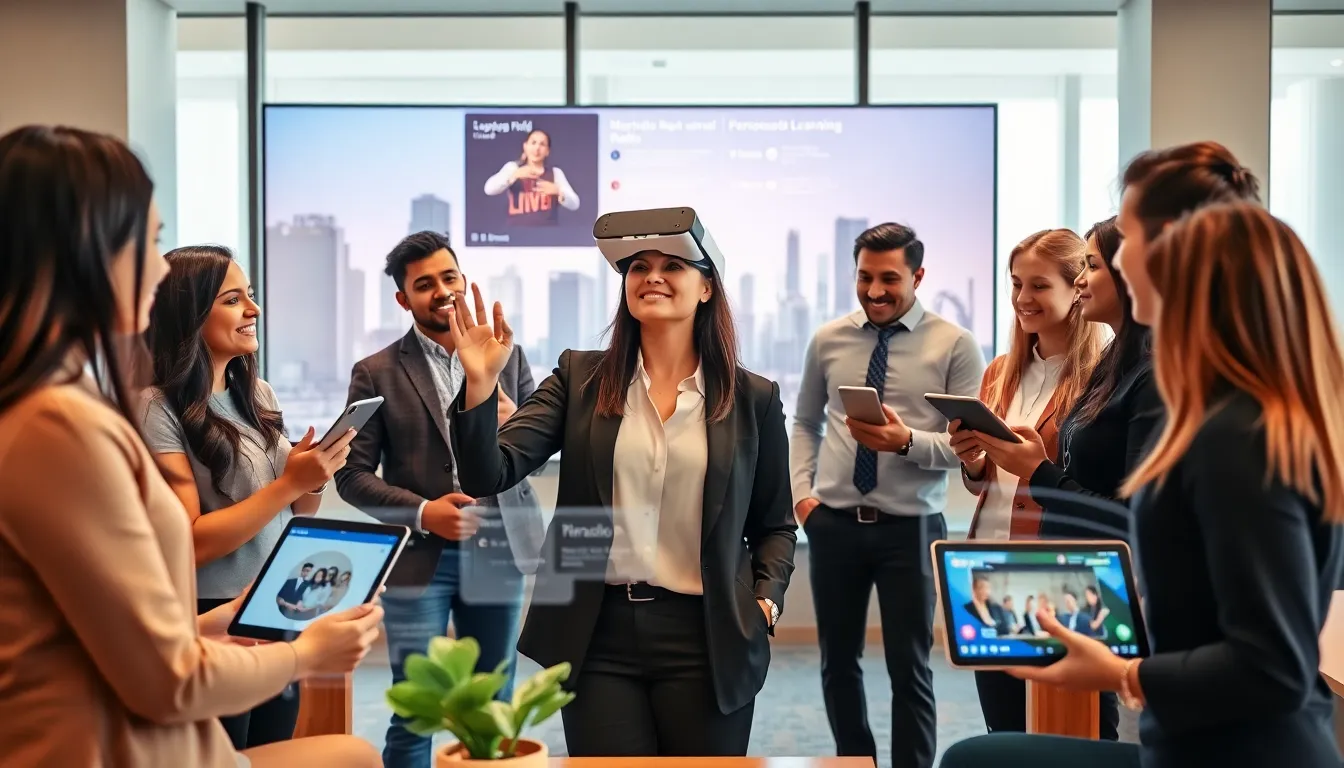
Virtual reality (VR) and immersive technology are changing language education from passive study to active experience. Among 2026 language learning trends, this shift stands out. Learners can now practice ordering coffee in Tokyo or asking for directions in Berlin, without leaving home.
VR headsets like Meta Quest and Apple Vision Pro have dropped in price and improved in quality. Language apps are catching up. Platforms such as Mondly VR and ImmerseMe place users in lifelike scenarios. They interact with virtual characters. They respond to questions. They get real-time feedback.
Why does immersion matter? Context drives retention. Reading a phrase in a textbook differs from using it in a simulated conversation. The brain encodes language better when emotions and physical engagement are involved. VR provides that engagement.
Augmented reality (AR) also plays a role. Apps overlay translations on real-world objects through smartphone cameras. Point at a sign, see the translation. Point at a menu, hear the pronunciation. This blends learning with daily life.
Language learning trends 2026 suggest immersive tools will move from niche to mainstream. Schools and corporate training programs are adopting VR modules. Independent learners are downloading apps that make practice feel like travel. The line between study and experience is blurring, and that’s a good thing.
Growing Demand for Less Commonly Taught Languages
Spanish, French, and Mandarin have dominated language education for decades. But language learning trends 2026 reveal a shift. More people are studying less commonly taught languages (LCTLs) like Korean, Arabic, Swahili, and Portuguese.
Several factors drive this change. Pop culture plays a big role. Korean dramas and K-pop have sparked global interest in the Korean language. Arabic attracts learners interested in business opportunities across the Middle East. Portuguese opens doors to Brazil’s massive economy.
Geopolitics also matters. Companies expanding into Africa need employees who speak Swahili, Yoruba, or Amharic. Governments seek diplomats fluent in languages once considered obscure. The demand is real, and growing.
Online platforms have made LCTLs accessible. Before, finding a Swahili tutor in a small town was nearly impossible. Now, apps connect learners with native speakers anywhere. Preply, iTalki, and similar services offer lessons in dozens of languages. Content libraries have expanded too. YouTube channels, podcasts, and streaming shows provide free exposure.
Language learning trends 2026 show that learners are thinking strategically. They see value in standing out. Speaking Mandarin is impressive. Speaking Uzbek or Tagalog? That’s rare, and often more useful in specific careers.
This diversification strengthens global communication. It also preserves languages at risk of fading. Learners in 2026 aren’t just studying for tests. They’re connecting with cultures.
Social and Community-Based Learning Gains Momentum
Language learning has always been a social activity. Babies learn by listening to parents. Students practice with classmates. But apps turned study into a solo pursuit, just a screen and a user. That’s changing. Social and community-based learning is among the strongest language learning trends 2026 will showcase.
Platforms are building features that connect learners. Discord servers host conversation practice groups. Tandem and HelloTalk pair users with native speakers for language exchanges. Reddit communities share resources, memes, and encouragement in target languages.
Why does community matter? Accountability, for one. Learners who join groups stick with their goals longer. They show up because others expect them. They celebrate progress together.
Social learning also provides authentic practice. Textbooks teach formal language. Real conversations include slang, humor, and cultural nuance. Chatting with a native speaker in Argentina teaches different Spanish than a classroom in Ohio.
Corporate language programs are adopting group models too. Employees learn together, practice in meetings, and build team cohesion. Schools are partnering across borders for virtual exchange programs.
Language learning trends 2026 reflect a simple truth: humans learn best from other humans. Technology enables connection, but people provide motivation. The best apps in 2026 won’t just teach, they’ll build communities.